
Tips & Notes
English terms that are helpful when setting up exhibits
 2025.11.21
*This article offers tips for Japanese speakers taking on the challenge of communicating in English.
When exhibiting at art museums outside Japan, appropriate terminology is vital for accurately communicating how an artwork should be handled and how it relates to the space. Here are some English terms often used when giving instructions for setting up exhibits and confirming the situation at the venue.
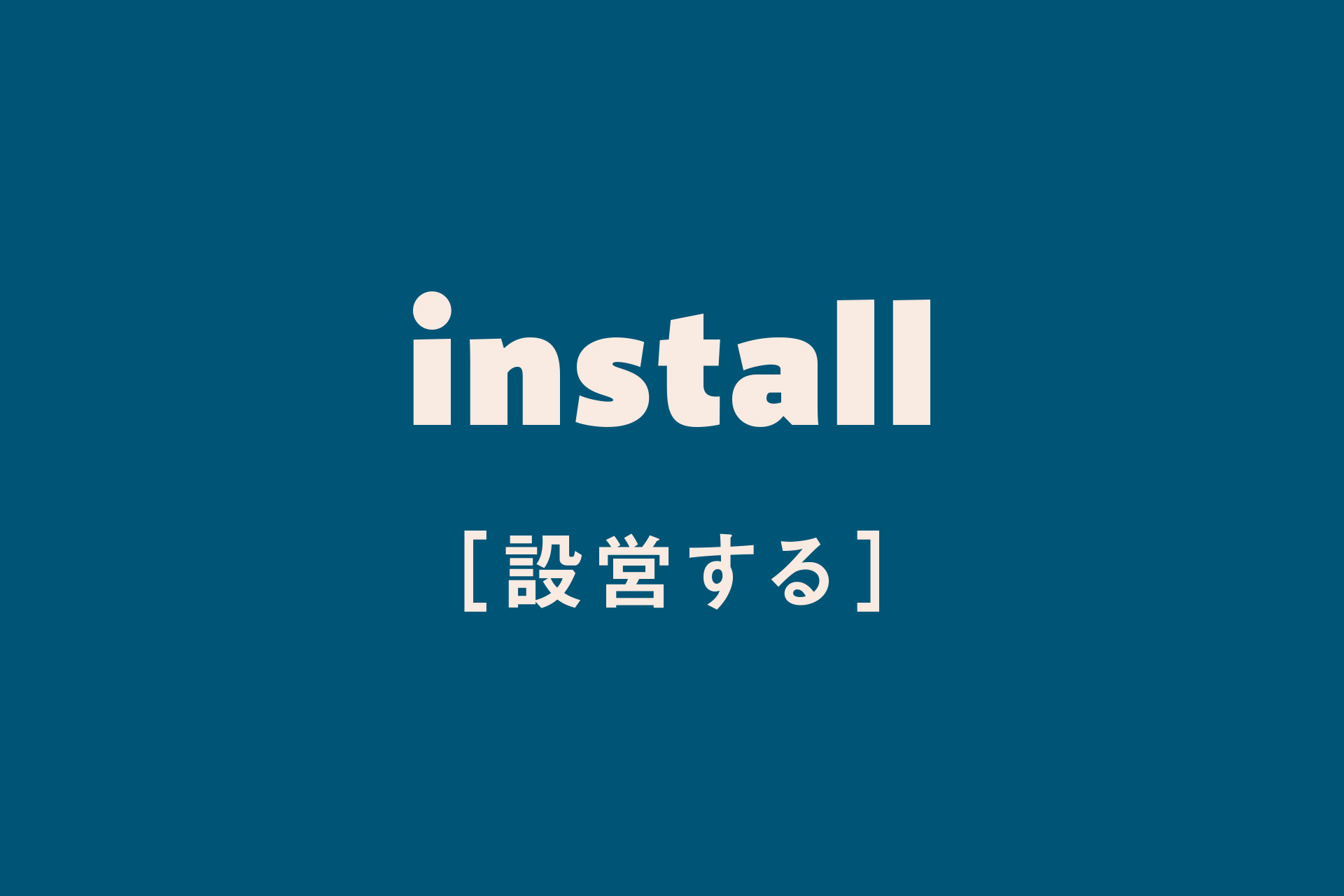
“Install” is a basic term used when talking about setting up exhibits in general.
Example: We will install the video equipment tomorrow morning.
People also often use “set up” to mean the same thing.
Example: We need to set up everything before the talk.
Conversely, “deinstall” is used when removing exhibits after the exhibition.
The following terms are used for specific tasks.
“Mount” is often used for attaching or fixing objects onto something.
Example: The monitor will be mounted on the wall.
Use “hang” when suspending something on a wall or from the ceiling.
Example: Let’s hang the painting at eye level.
Use “position” when placing an object on the floor or adjusting its location.
Example: Please position the sculpture closer to the window.
Using the appropriate terminology for the specific situation makes communication on-site go much more smoothly when setting up exhibits. It is useful to think in advance about the necessary terms for the tasks involved.
Point!
When setting up exhibits, communication goes more smoothly if you use the appropriate English terms for the exhibits and the processes involved.